
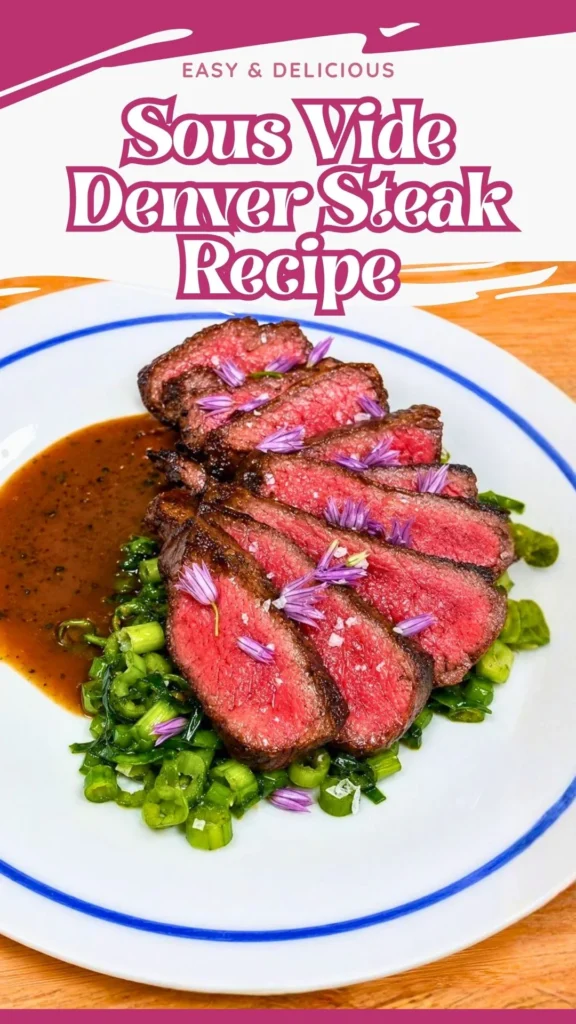
I’ll be honest – I almost didn’t order it. The menu just said Denver steak, and I had no idea what I was getting into. But one bite of that deeply caramelized crust giving way to the most shockingly tender, marbled interior I’d ever tasted, and I was done for.
I spent the next two weeks obsessing over how to replicate it at home. This Sous Vide Denver Steak Recipe is the result of that obsession. This recipe combines the precision of sous vide cooking with the rich flavor of a hot butter baste.
The steaks are slowly cooked in a temperature-controlled water bath until perfectly tender from edge to edge, then quickly seared in a blazing-hot skillet with garlic, shallots, butter, and fresh thyme. The finishing touch is a glossy tamarind pan sauce that perfectly complements the beef.
What Is Denver Steak and Why Do Steak Lovers Swear By It?
Denver steak comes from the chuck roll – specifically the serratus ventralis muscle tucked underneath the shoulder blade. It holds a remarkable distinction: it is the fourth most tender cut on the entire animal, a fact that surprises almost every home cook who discovers it.
What sets it apart from other chuck cuts is its exceptional intramuscular marbling. That fat doesn’t just add richness – it bastes the meat from within as it cooks, producing a juicy, almost buttery texture that rivals far more expensive cuts.
Flavor-wise, Denver steak is deeply beefy and complex, with a satisfying chew that resolves into genuine tenderness.
It’s often compared to the flat iron or the ribeye, but it sits comfortably in its own category: more richly flavored than flat iron, far more affordable than a ribeye, and – when properly cooked, as in this sous vide Denver steak recipe – every bit as impressive on the plate. It’s the kind of cut that makes you feel like you’ve found a well-kept secret.
The History Behind Denver Steak: A 21st-Century Discovery
Denver steak isn’t a century-old butchery tradition passed down through generations – it’s a surprisingly modern discovery, which makes it all the more interesting.
The cut was identified and formally developed around 2009, the result of a beef industry research initiative specifically aimed at finding underutilized, high-value muscles buried within the chuck primal.
The project was led by meat scientists at the University of Florida and Colorado State University, who set out to prove that the loin and rib sections aren’t the only places worth paying attention to.
Their findings were significant: the serratus ventralis muscle, long ignored by most butchers, had exceptional marbling and tenderness that put it in a completely different league from other chuck cuts.
The “Denver” name was chosen as part of a marketing effort – the cut has no real geographic connection to Colorado. What it did have was a flavor profile tailor-made for modern cooking techniques.
The discovery that it could be sliced into proper steaks, and that methods like sous vide cooking showcased its qualities particularly well, gave Denver steak a genuine culinary identity of its own.
Key Ingredients That Give This Denver Steak Recipe Its Signature Flavor
Understanding why each ingredient is here will help you cook with intention – not just by following steps.
The Denver Steaks Themselves This recipe lives or dies by cut quality. Look for steaks with heavy visible marbling, a deep red-burgundy color, and at least ¾-inch thickness. Prime or Choice grade will give you the most flavor and the widest cook window.
Salt and Black Pepper A generous, even seasoning crust isn’t decorative – it’s structural. Salt draws surface moisture out and then pulls it back into the meat, which primes the exterior for a deep, dark Maillard crust during the sear. Use kosher salt for clean flavor and easy, even coverage.
Garlic (Halved Horizontally) Slicing the garlic head crosswise exposes every clove simultaneously to the hot butter, creating a slow, deeply aromatic infusion. As you baste, those flavors are carried directly onto the steak with every spoonful.
Shallots Where garlic is pungent, shallots are sweet and nuanced. They soften quickly in the butter and add a gentle allium depth that rounds out the baste beautifully without overpowering the beef.
Fresh Thyme Woody, earthy thyme is built for high-heat cooking. Its oils release into hot butter almost immediately, giving each basting spoonful a distinctly herbal, aromatic complexity that makes the crust of this Denver steak remarkably layered.
Tamarind Sauce This is the ingredient that takes the dish somewhere unexpected. Tangy, slightly sweet, and deeply complex, tamarind cuts through the richness of the butter-basted steak and transforms the pan drippings into a glossy, restaurant-quality finish that makes this recipe genuinely its own thing.
Recipe Ingredients
The Steaks
| Ingredient | Amount | Notes |
|---|---|---|
| Denver steaks | 2 (6–8 oz each) | At least ¾ inch thick, Choice or Prime grade |
| Kosher salt | Generous coating | Season every surface |
| Black pepper, freshly ground | To taste | Coarse grind preferred |
| High-smoke-point oil | 1 tbsp | Avocado, grapeseed, or refined coconut oil |
The Butter Baste
| Ingredient | Amount | Notes |
|---|---|---|
| Unsalted butter | 1–2 tbsp, cubed | Cube for even melting |
| Garlic | 1 head, halved horizontally | Exposes all cloves to the butter |
| Shallots | 2–3, peeled and cut into wedges | Sweet and aromatic |
| Fresh thyme | 4–5 sprigs (small bundle) | Dried won’t behave the same way |
The Tamarind Pan Sauce
| Ingredient | Amount | Substitution |
|---|---|---|
| White wine, sake, or stock | ¼ cup | All three work well |
| Tamarind paste or sauce | 2 tbsp | 1 tbsp Worcestershire + 1 tsp lime juice |
The Sides
| Ingredient | Amount | Notes |
|---|---|---|
| Asparagus | 1 bunch | Sliced into thin round coins |
| Green chili or scallion | 1, thinly sliced | Adds freshness and gentle heat |
| Purple chive flowers | Optional | A beautiful garnish |
| Cooked white rice | For serving | Jasmine or Japanese short-grain work best |
Tools You Need to Make Denver Steak at Home
- Sous vide immersion circulator – for the precision temperature-controlled water bath
- Large stockpot or sous vide container – to hold the water bath
- Vacuum sealer and bags (or heavy-duty freezer zip-top bags) – for sealing the steaks
- 12-inch stainless steel skillet or cast iron pan – essential for high-heat searing and proper fond development
- Large metal spoon – for continuous basting (handles the heat better than silicone)
- Tongs – for safely flipping and handling the steaks
- Instant-read meat thermometer – for precision doneness
- Wooden spoon or silicone spatula – for deglazing and scraping the fond
- Sharp chef’s knife – for slicing the rested steak cleanly against the grain
- Cutting board with juice groove – catches the resting juices
- Small bowl – for tossing the asparagus salad
Timing at a Glance
| Stage | Time |
|---|---|
| Prep | 10 minutes |
| Sous vide | 2½–3 hours |
| Searing | 2 minutes |
| Butter baste | 1 minute |
| Sauce + plating | 5–7 minutes |
| Total | About 3 hours |
Servings: 2
Steps to Make This Sous Vide Denver Steak Recipe
Phase 1: Sous Vide and Sear
Step 1 – Season and bag the steaks.
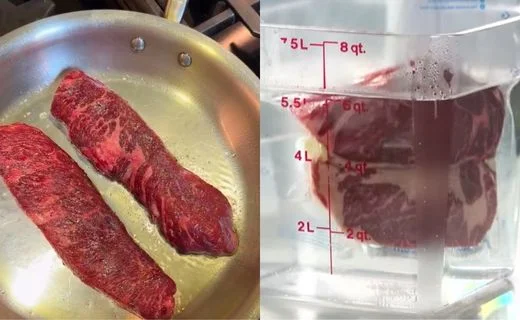
Pat both steaks completely dry with paper towels. Season every surface generously with kosher salt and freshly ground black pepper. Place the steaks into a vacuum-seal bag (or a heavy-duty freezer zip-top bag) and seal.
Step 2 – Sous vide.
Preheat a sous vide water bath to: 130°F (54.5°C) for medium-rare or 135°F (57°C) for medium
Submerge the sealed bag completely and cook for 2½–3 hours.
Step 3 – Dry the steaks.
Remove the steaks from the bag and discard the juices. Pat the steaks extremely dry with paper towels. The drier the surface, the better the crust.
Step 4 – Heat the pan.
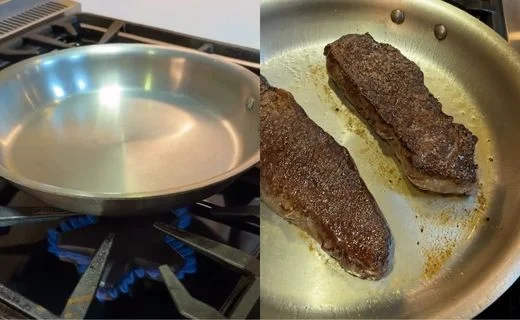
Set your 12-inch skillet over high heat. Add the oil and let it heat until shimmering.
Step 5 – Quick sear.
Sear the steaks 45–60 seconds per side until a deep brown crust forms.
Phase 2: Butter Baste and Rest
Step 6 – Add the aromatics.
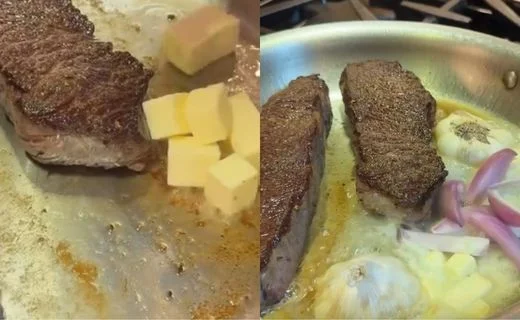
Reduce heat to medium. Drop the cubed butter, halved garlic (cut-side down), shallot wedges, and thyme sprigs directly into the pan beside the steaks.
Step 7 – Butter baste.
As the butter melts and begins to foam, tilt the pan slightly toward you.
Using your large spoon, scoop the hot, bubbling garlic-thyme butter from the bottom of the pan and pour it steadily over the tops of both steaks.
Do this repeatedly, without stopping, for about 1 minute. Since the steaks are already perfectly cooked from the sous vide bath, the butter baste is simply adding flavor while deepening the crust.
Step 8 – Rest the steaks.
Transfer both steaks to a clean plate and let them rest for 2–3 minutes while you prepare the sauce.
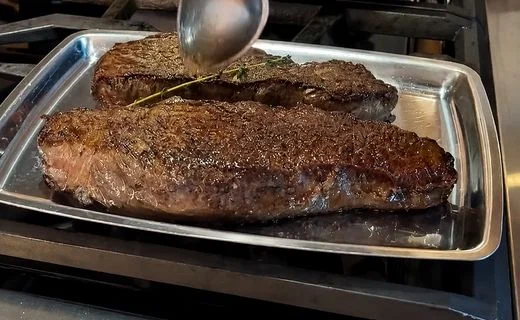
Do not clean the pan – the butter, garlic, shallots, and thyme left behind are your sauce foundation.
Phase 3: Pan Sauce and Plating
Step 9 – Deglaze.
Pour the wine, sake, or stock into the still-hot pan. It will sizzle and steam dramatically – perfect.
Use your wooden spoon to scrape up every bit of caramelized fond from the bottom. Those stuck-on bits are pure concentrated flavor.
Step 10 – Build the tamarind sauce.
Stir in the tamarind paste. Let the mixture bubble and reduce over medium heat for 2–3 minutes, stirring occasionally, until it becomes a thick, glossy, deeply flavored sauce.
Taste and adjust with a pinch of salt or a small drizzle of honey if needed. Remove from heat.
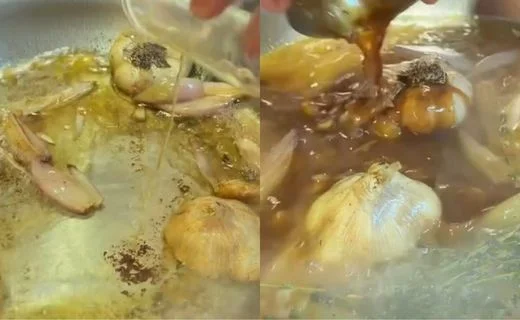
Step 11 – Toss the salad.
In a small bowl, toss the thinly sliced asparagus coins with the green chili or scallion. Spread this bright, crisp mixture across your serving plate as a fresh bed.
Step 12 – Slice and plate.
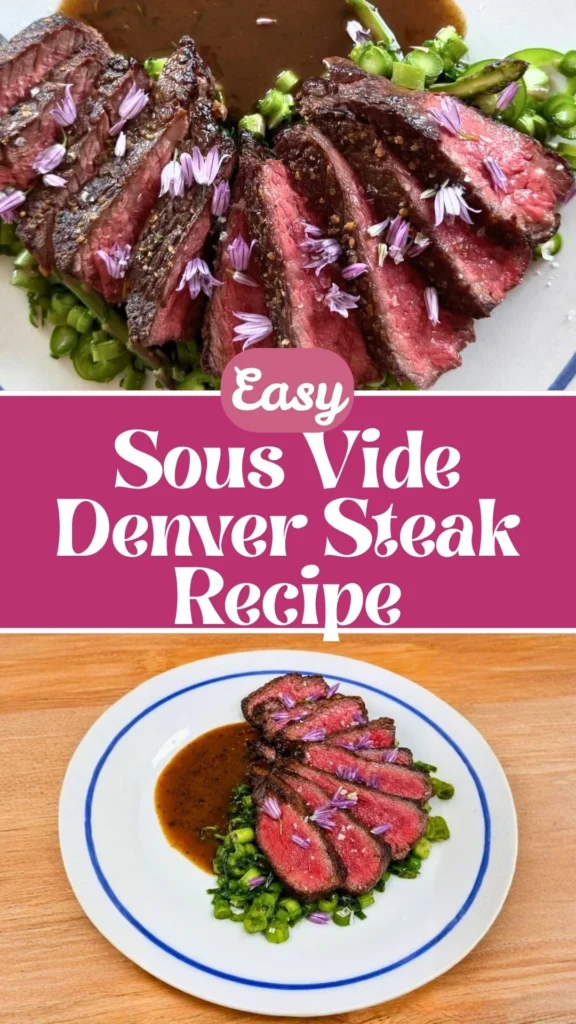
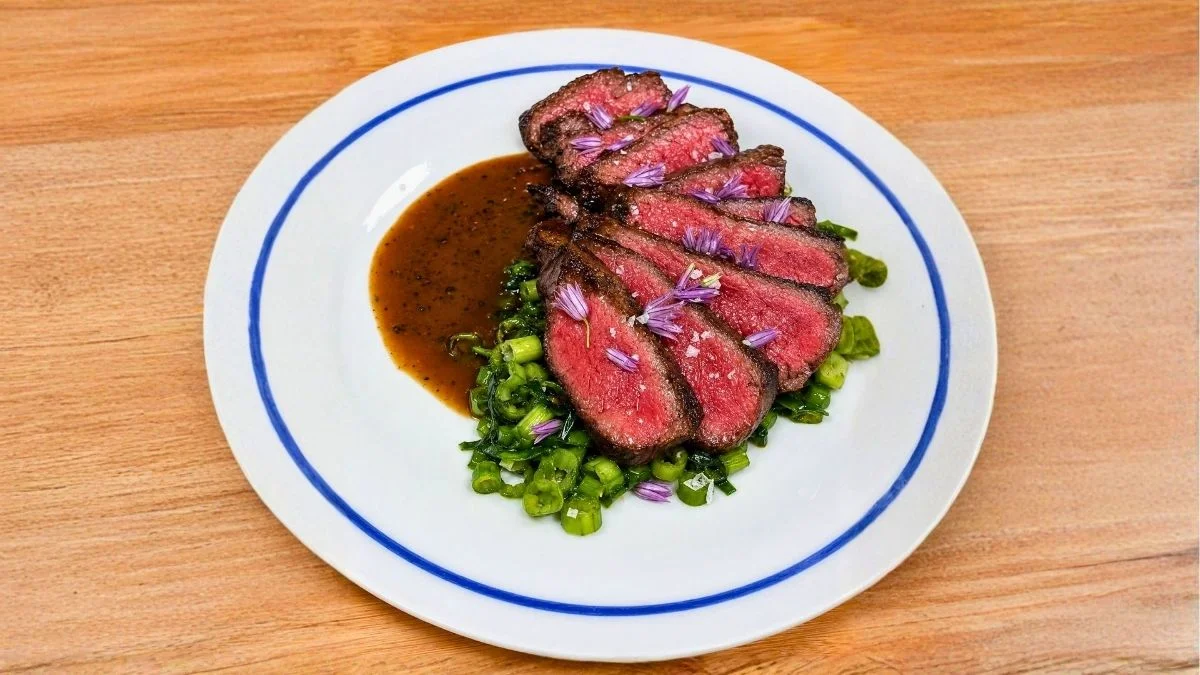
Slice the rested steaks against the grain into strips. Fan the slices over the asparagus salad. Spoon the warm tamarind sauce generously over everything.
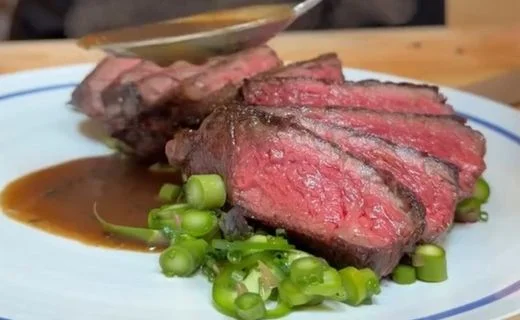
Scatter purple chive flowers over the top. Serve immediately with hot white rice on the side.
Pro Tips for Getting the Flavor Just Right
Dry the steaks completely – twice if needed. Even a small amount of surface moisture will cause the steak to steam instead of sear, and you’ll lose the dark, flavor-packed crust entirely. Pat dry, season, then check again just before the steaks hit the pan.
Use stainless steel or cast iron – not nonstick. Nonstick pans can’t handle the temperatures a proper sear requires. More critically, they don’t develop the fond – the caramelized layer of drippings at the bottom of the pan that is the entire foundation of your pan sauce. Stainless steel or cast iron are the only right choices here.
Do not move the steak once it’s in the pan. Resist every urge to lift, peek, or reposition the meat. Moving it interrupts the Maillard reaction – the browning process that creates the flavor compounds responsible for everything you love about a well-seared steak. The steak is ready to flip when it releases from the pan naturally.
Baste aggressively and without stopping. After sous vide cooking, pat the steaks completely dry before searing. Removing surface moisture helps create a rich, deeply browned crust in under a minute per side. Once the aromatics are in, baste continuously – the garlic-thyme butter will deepen the crust and infuse the surface with flavor in the short time it has.
Season the tamarind sauce as it reduces. Tamarind products vary widely in intensity and sweetness across brands. Always taste your sauce as it simmers. Too tart? A small drizzle of honey or pinch of brown sugar. Too sweet? A squeeze of lime juice will snap it back into balance immediately.
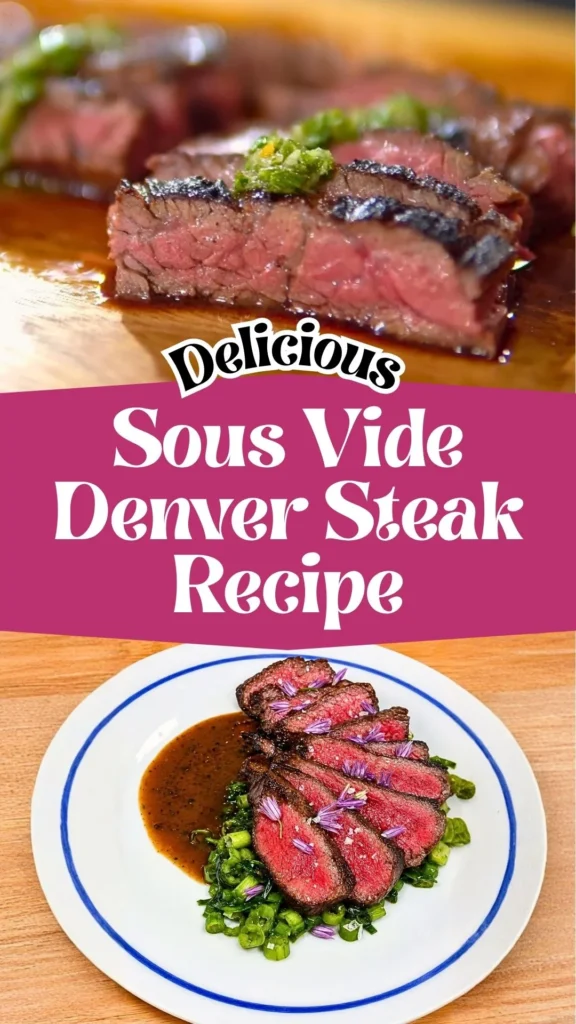
Always slice against the grain. Denver steak’s long muscle fibers run in one direction. Slicing with the grain produces chewy, stringy bites; slicing against it – perpendicular to those fibers – shortens them dramatically. Look at the surface of the rested steak and cut across the lines you see running through it.
Easy Variations to Customize Your Denver Steak
Spicy Tamarind Glaze Add a dried chili de árbol or a teaspoon of gochujang into the pan sauce while it reduces. The smoky, building heat pairs beautifully with tamarind’s tang and the butter richness of the steak.
Asian-Inspired Miso Glaze Replace the tamarind paste with a mixture of white miso and mirin for a deeply savory, umami-forward sauce that shifts the entire dish toward Japanese flavor territory.
Herb Swap No thyme? Rosemary and fresh sage both work in the basting butter. Rosemary is especially bold and perfumy – use just 2 small sprigs rather than a full bundle.
Keto / Low-Carb Version Skip the rice and serve the steak over Sous Vide Broccoli or cauliflower rice. The tamarind sauce and asparagus salad are naturally low in carbohydrates and need no modification.
Dairy-Free Option Substitute a high-quality plant-based butter for the regular butter. The baste won’t foam the same way, but the garlic and thyme will still infuse the fat beautifully and carry their flavor directly onto the steak.
Best Ways to Serve Denver Steak in Your Meals
The Classic Plate (As Written) Sliced over the fresh asparagus coin salad, with the warm tamarind sauce spooned generously over everything and hot white rice alongside. This is the fully balanced plate – savory steak, tangy glaze, and the bright, cool crunch of asparagus all working together.
The Grain Bowl Swap white rice for farro, brown rice, or barley. Add pickled cucumbers, a soft-boiled egg, and a generous drizzle of tamarind sauce as the dressing. This makes an outstanding meal-prep lunch that holds up beautifully through the week.
Steak Tacos Thinly sliced Denver steak is exceptional in warm, soft flour tortillas. Add a quick cabbage slaw, the sliced green chili, and a spoonful of tamarind sauce as the dressing. It’s a crowd-pleaser that works for casual gatherings without any extra seasoning needed.
Elevated Date Night Plating Spread a swoosh of creamy mashed potato or smooth white bean purée across the center of the plate. Fan the steak slices artfully over the top. Drizzle with tamarind glaze and finish with microgreens and chive flowers. Simple enough for a home kitchen, impressive enough for company.
Weeknight Leftovers Cold, thinly sliced Denver steak is exceptional in salads, grain bowls, and breakfast plates alongside fried eggs. The tamarind sauce keeps refrigerated for up to 5 days and functions beautifully as a dressing, dipping sauce, or glaze for roasted vegetables.
How to Store and Reheat Leftover Denver Steak
Store leftover steak in an airtight container in the refrigerator for up to 3 days. Keep the tamarind sauce in a separate container to prevent the meat from becoming soggy.
To reheat, warm steak slices gently in a skillet over low heat with a small splash of stock or water, covering loosely to trap steam and keep moisture in. Avoid the microwave – it overheats the exterior before the interior is warm, and noticeably toughens the proteins.
The fresh asparagus salad is best eaten the day it’s made and does not store well.
Nutrition Facts and Dietary Notes
Per serving, approximately (steak and sauce, without rice):
| Nutrient | Amount |
|---|---|
| Calories | ~480 kcal |
| Protein | ~38g |
| Total Fat | ~30g |
| Carbohydrates | ~10g |
| Fiber | ~3g |
- Gluten-Free: Naturally gluten-free when using certified GF tamarind sauce and stock – always verify labels.
- Dairy-Free: Replace butter with a quality plant-based alternative.
- Keto / Low-Carb: Remove the rice and serve with non-starchy vegetables; the steak and sauce are naturally very low in carbs.
- High-Protein: An excellent source of complete protein, heme iron, zinc, and B vitamins, particularly B12.
Frequently Asked Questions
To help you along, we’ve put together answers to some of the most common questions about this recipe.
Can I use a different cut if I can’t find Denver steak?
Yes – flat iron steak is the closest substitute. It comes from the same chuck primal, has comparable marbling and tenderness, and responds beautifully to butter basting. Hanger steak and skirt steak are solid alternatives with a bolder, more mineral-forward flavor.
Do I need to marinate Denver steak before cooking?
Not for this recipe. Denver steak has enough intramuscular fat and natural flavor to stand on its own with proper seasoning alone. A marinade can actually work against you by adding surface moisture that inhibits crust formation during the sear.
What internal temperature is ideal for Denver steak?
Medium-rare – between 130–135°F (54–57°C) – is the sweet spot for this cut. Cook the steaks in the sous vide bath set to your desired final temperature. The finishing sear is brief and develops the crust without significantly raising the internal temperature. Going past medium (140°F) can start to compromise Denver steak’s signature tenderness.
Can I make the tamarind pan sauce ahead of time?
You can prepare a simple tamarind base in advance, but the full sauce is best made fresh in the pan with the steak drippings – the fond adds irreplaceable depth. If making ahead, store refrigerated for up to 5 days and reheat gently with a splash of stock to loosen.
What can I substitute for tamarind if I can’t source it?
A combination of 1 tablespoon Worcestershire sauce and 1 teaspoon fresh lime juice gives you a similar sweet-sour-savory complexity. Pomegranate molasses is another excellent substitute – it brings the same glossy texture and tangy depth with a slightly fruitier finish.
Sous Vide Denver Steak Recipe
Ingredients
Method
- Pat the steaks dry and season generously with salt and pepper.
- Place in a vacuum-seal bag (or freezer zip-top bag) and seal.
- Cook in a 130°F (54.5°C) water bath for medium-rare or 135°F (57°C) for medium for 2½–3 hours.
- Remove the steaks from the bag, discard the juices, and pat the steaks completely dry.
- Heat a large skillet over high heat. Add the oil and heat until shimmering.
- Sear the steaks for 45–60 seconds per side until a deep brown crust forms.
- Reduce the heat to medium. Add the butter, garlic, shallots, and thyme. Baste the steaks continuously for 1 minute.
- Transfer the steaks to a plate and let them rest for 2–3 minutes. Leave the butter and aromatics in the pan.
- Deglaze the pan with the wine, sake, or stock. Stir in the tamarind paste and simmer for 2–3 minutes until thickened. Adjust the seasoning if needed.
- Toss the sliced asparagus with the green chili or scallion and arrange on a serving plate.
- Now,slice the steaks against the grain.
- Serve over the asparagus salad, spoon the tamarind sauce on top, garnish with chive flowers, and serve with white rice
Video
Notes
Denver steak doesn’t get nearly the recognition it deserves, and this recipe is proof of exactly what it’s capable of. The butter baste, the tamarind sauce, the crisp asparagus bed – every element earns its place on the plate, and together they create something that feels far more restaurant-worthy than the effort involved.
We’d love to hear what you think of this recipe! Give it a try and let us know how it turned out by leaving a comment below. Don’t forget to follow us on Pinterest, Facebook and YouTube for more delicious recipes, cooking inspiration, and kitchen tips. Your feedback and support help us continue creating content you’ll love!
Looks Delicious
Thanks Janey
Wow.I seriously feel like cooking it this afternoon.
Glad to hear that.
Looks Delicious
Thanks
This is why I’m glad I break down my own meats! I buy an entire chuck roll and get steaks, roasts, stew meat and the denver… love the denver steaks