
I’ll be honest – the first time I attempted a classic braised osso buco on the stovetop, I spent most of Sunday afternoon hovering over a pot, adjusting heat, peeking under the lid, second-guessing the timing.
It came out decent. But when I made my first sous vide osso buco, I sealed the bag, slid it into the oven before bed, and woke up to a kitchen that smelled like a Milanese trattoria had quietly moved in overnight.
The beef shanks were impossibly tender. The sauce was glossy, rich, and deeply savory. The beet and root vegetables had given the broth this gorgeous, earthy sweetness I hadn’t expected. And I had done almost nothing. That is the quiet magic of this Sous Vide Osso Buco recipe – all that deep, slow-cooked flavor with none of the babysitting.
Note: This recipe uses oven sous vide mode at 70°C (158°F) and cooks overnight (8–12 hours), so plan ahead!
What Is Osso Buco and Why Do Fans Love It?
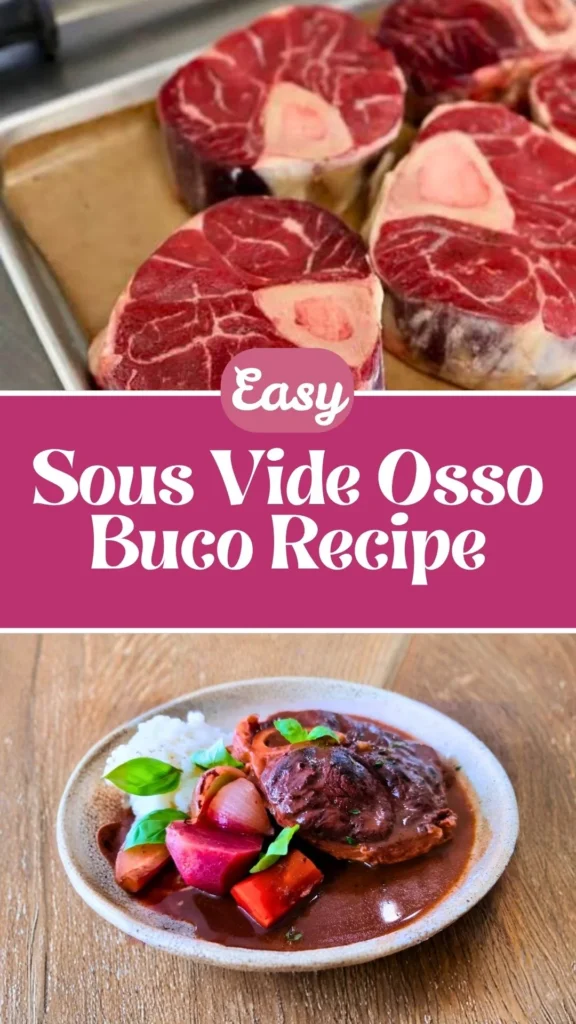
Osso buco – Italian for “bone with a hole” – is a braised shank dish whose name is also its defining feature. That hollow bone at the center holds bone marrow, which slowly melts into the braising liquid during cooking, lending it a silky, almost indescribable richness that no amount of added thickener can replicate.
Traditionally made with veal shanks in Milan, the dish has evolved into a global comfort food icon, with beef osso buco winning over fans for its bolder, more robust flavor.
What makes devotees almost evangelical about it is the contrast: meat so tender it yields at the slightest pressure of a fork, against a thick, wine-and-tomato-enriched sauce built from hours of patience.
Compared to a Sunday pot roast or a slow-cooked beef stew, osso buco feels elevated – almost restaurant-worthy – yet it’s fundamentally a peasant dish, built entirely from humble ingredients transformed by time. The sous vide method honors that tradition while eliminating the guesswork that trips up even confident home cooks when braising on the stovetop.
The Nostalgic History Behind Osso Buco
Osso buco traces its roots to 19th-century Milan, where cooks in the Lombardy region discovered that slow-braising cross-cut veal shanks in white wine and broth unlocked extraordinary tenderness and depth of flavor. For generations, it belonged to Italian grandmothers and long Sunday kitchens – a dish that required hours of quiet, attentive stovetop work.
As Italian cuisine spread globally through the 20th century, osso buco followed, eventually earning a place on fine-dining menus alongside its classic companions: saffron risotto alla Milanese and gremolata – a bright, herb-forward condiment of lemon zest, garlic, and fresh parsley.
Over time, beef shanks began replacing the more expensive and harder-to-find veal in many home kitchens, giving rise to a heartier, more accessible version of the dish.
Today’s sous vide osso buco is meaningfully different from that stovetop heritage. The controlled-temperature environment of a sous vide oven or circulator eliminates the single greatest risk in classic braising: overshooting the temperature and ending up with meat that’s simultaneously overcooked and tough. The soul of the dish remains unchanged – the technique has simply been perfected.
Key Ingredients That Give Sous Vide Osso Buco Its Signature Flavor
The magic of this dish lies not in complexity, but in what each ingredient quietly contributes to the final braising sauce and the texture of the meat.
Beef Shanks are the non-negotiable star. Cross-cut to expose the center bone, they slowly release collagen and marrow into the liquid over the long cook, creating a naturally thick, glossy sauce that no cornstarch can mimic. The tough connective tissue that would be chewy in a quick cook becomes silky and luxurious after 10–12 hours at 70°C.
Root Vegetables – Beet, Carrots, Parsnips, and Celery Root are far more than side characters here. Sealed inside the bag, they break down slowly and release their natural sugars into the braising liquid. The beet in particular adds an earthy depth and a beautiful, jewel-toned color to the finished sauce that makes it visually striking on the plate.
White Wine brings acidity and brightness that cuts through the richness of the beef and the butter finish. It also gently tenderizes the meat at a cellular level during the long overnight cook.
Tomato Sauce contributes umami depth, body, and a gentle tartness that ties the entire sauce together without overwhelming the beefy character of the shank.
Fresh Thyme and Bay Leaves are the aromatic backbone of the dish. Their oils infuse slowly and gently over hours, perfuming both the meat and the liquid in a way that prolonged stovetop cooking would turn bitter.
Cold Butter, swirled into the reduced sauce at the very end, is the final act of luxury – the step that turns a thin braising liquid into a glossy, restaurant-quality sauce that clings to every grain of rice on the plate.
Recipe Ingredients
Serves 4
For the Osso Buco:
| Ingredient | Amount | Notes & Substitutions |
|---|---|---|
| Beef shanks (osso buco cut) | 4 pieces | Ask your butcher for cross-cut shanks, ~1.5–2 inches thick. Sub: veal shanks for a milder, more traditional flavor |
| Yellow onions | 2 medium | Peeled and quartered. Sub: shallots for a sweeter result |
| Beet | 1 medium | Peeled, cut into large chunks. Sub: skip and add an extra carrot |
| Carrots | 2 medium | Peeled, cut into large pieces |
| Celery root (celeriac) | 1 medium | Peeled, cut into chunks. Sub: 3–4 celery stalks |
| Parsnips | 2 medium | Peeled and cut into large pieces |
| Garlic cloves | 2 | Left whole or lightly crushed |
| Fresh thyme | 4–5 sprigs | Sub: 1 tsp dried thyme |
| Bay leaves | 2–3 leaves | |
| Tomato sauce (passata) | 200 ml | Sub: 2 tbsp tomato paste + 150 ml water for more intensity |
| Dry white wine | 150 ml | Pinot Grigio or Sauvignon Blanc. Sub: dry vermouth or unsalted chicken broth |
| Salt | To taste | |
| Black pepper | To taste | Freshly ground preferred |
| Cold butter | 2–3 tbsp | For finishing the sauce – Sub: drizzle of good olive oil for dairy-free |
For Serving:
| Ingredient | Amount | Notes |
|---|---|---|
| Long-grain or jasmine rice | As needed for 4 | Cooked per package directions |
| Butter | Small knob | Stirred into the rice while hot |
Tools You Need to Make Sous Vide Osso Buco at Home
Kitchen Equipment:
- Oven with Sous Vide mode (or a countertop immersion circulator like Anova or Joule, with a large pot or water bath container)
- Vacuum sealer machine
- Food-safe vacuum-seal bags suitable for extended, high-temperature cooking
- Large saucepan or wide skillet (for reducing the braising liquid)
- Sharp chef’s knife and sturdy cutting board
- Ladle and tongs for serving
- Small spoon (for scooping the bone marrow – optional but deeply worth it)
Timing at a Glance:
| Stage | Time |
|---|---|
| Prep time | 20 minutes |
| Sous vide cook time | 8–12 hours (overnight) |
| Sauce reduction | 10–15 minutes |
| Rice cooking | ~15–20 minutes |
| Total time | ~13 hours (mostly hands-off) |
| Servings | 4 |
Steps to Make This Sous Vide Osso Buco Recipe
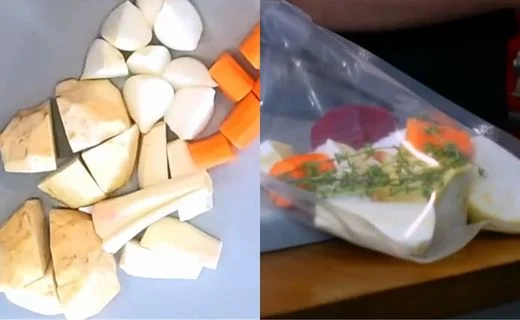
1. Prepare the vegetables.
Peel the onions, beet, carrots, celery root, and parsnips. Cut them into large chunks so they hold their shape during the long cook.
2. Fill the bag.
Place the vegetables in a vacuum-seal bag. Add the garlic cloves, thyme sprigs, and bay leaves.
3. Add the liquids.
Pour the tomato sauce and white wine into the bag, letting the liquid settle around the vegetables.
4. Add the beef shanks.
Place the beef shanks on top of the vegetables in a single, even layer whenever possible.
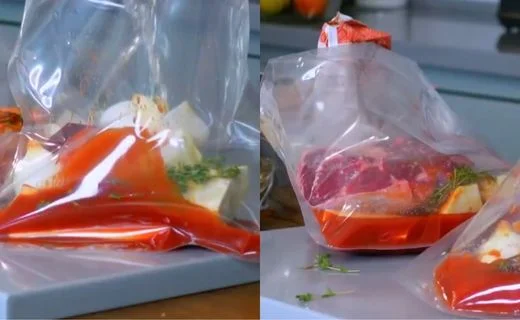
5. Seal the bag.
Vacuum-seal the bag securely. If your sealer has adjustable settings, use a medium vacuum to avoid crushing the ingredients.
6. Preheat the oven.
Set the oven to Sous Vide mode at 70°C (158°F) and let it fully preheat.
7. Cook the osso buco.
Place the sealed bag in the oven and cook for 8 to 12 hours. Cooking overnight produces the most tender meat.

8. Remove the cooking liquid.
Carefully open the bag and transfer the beef shanks and vegetables to a serving dish. Pour the cooking liquid into a medium saucepan.
9. Finish the sauce.
Bring the cooking liquid to a gentle simmer and reduce for 10–15 minutes until slightly thickened. Remove from the heat, then stir in the cold butter until the sauce is smooth and glossy.
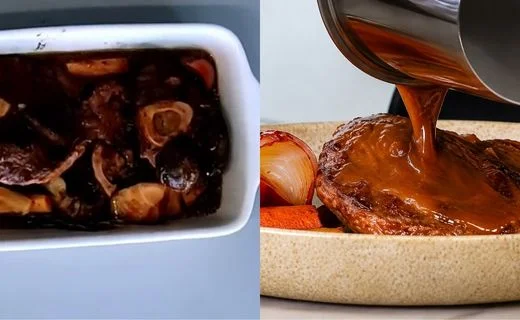
10. Cook the rice.
Prepare the rice according to the package directions. Stir in a small knob of butter while it’s still hot.
11. Serve.
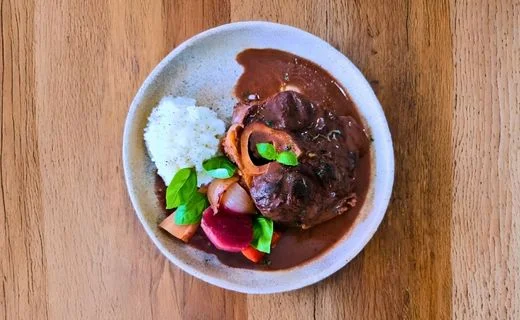
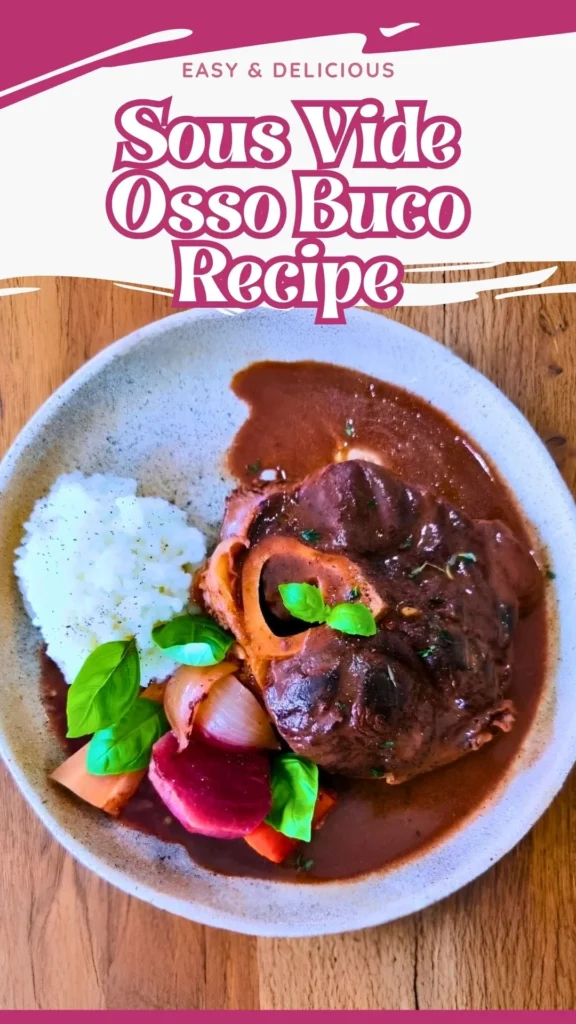
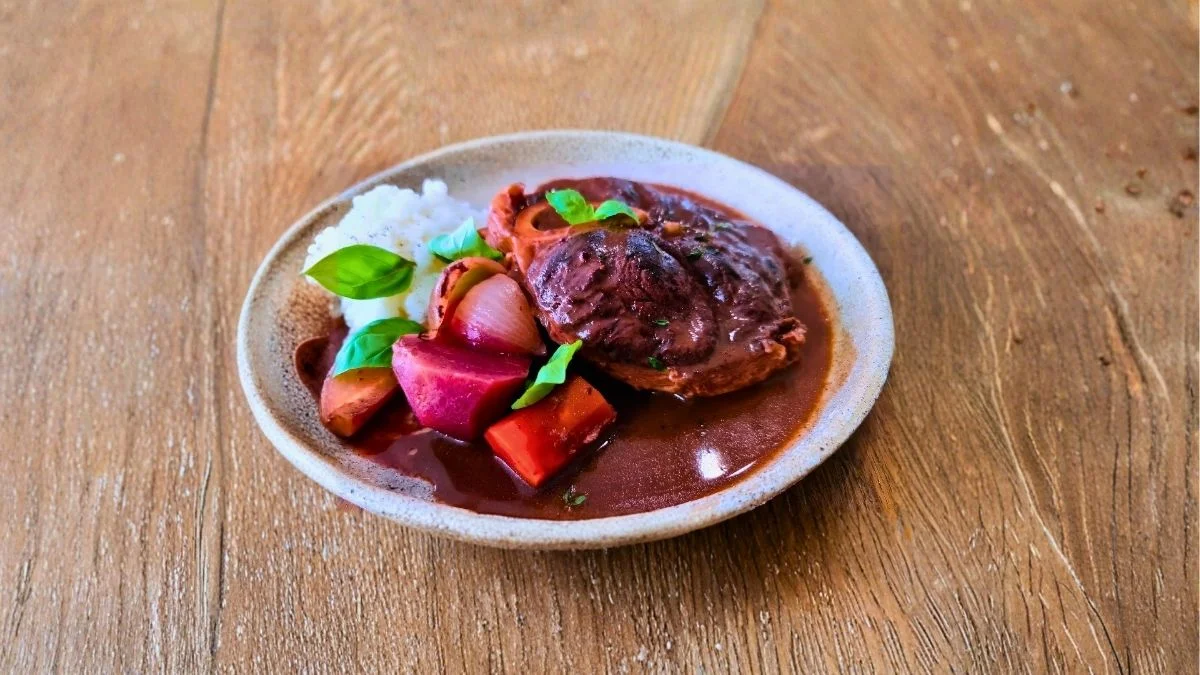
Season the sauce and rice with salt and black pepper to taste. Spoon the rice onto each plate, top with the vegetables and one beef shank, then finish with the warm sauce. Serve immediately.
Pro Tips for Getting the Flavor Just Right
Getting a sous vide osso buco right is mostly about patience – but these fine-tuning tips will lift your result from very good to genuinely exceptional.
Don’t skip the butter finish on the sauce. This technique – called monter au beurre in French cooking – is what separates a thin braising liquid from a glossy, restaurant-quality sauce. Always add cold butter off the heat and swirl rather than stir. If you add butter to a boiling liquid, the emulsion breaks and you’ll end up with a greasy, separated sauce rather than a smooth one.
Watch your vacuum level. A seal that’s too aggressive will force liquid out of the bag and compress the meat unnaturally. Vacuum level 2 (a medium seal) keeps the environment moist and the bag intact without distorting the shanks or losing precious braising liquid into the machine.
Consider searing before sealing. The recipe doesn’t require it, but if you have an extra 10 minutes, quickly searing the beef shanks in a very hot skillet before bagging them adds a Maillard-browned crust that deepens the flavor of the final sauce significantly. The sous vide process alone won’t create surface browning – only direct high heat does that.
Commit to the full overnight cook. Resist the urge to pull the bag at 8 hours. The full 10–12 hours at 70°C is where the collagen fully converts to gelatin, which is what gives the sauce its natural body and the meat that signature melt-in-your-mouth quality.
Keep your vegetables chunky. Small-cut vegetables will break down entirely into the braising liquid, which changes the texture of the final plate. Large chunks retain their shape and provide a satisfying, fork-friendly bite alongside the tender beef.
Taste the sauce before plating. A sauce that reduces too far can become too concentrated or slightly salty. If that happens, add a small splash of water or unsalted stock and stir to bring it back into balance before spooning it over the rice.
Easy Variations to Customize Your Osso Buco
One of the great things about this recipe is how easily it adapts to different tastes, occasions, and what you have on hand.
Classic Veal Osso Buco: Swap beef shanks for veal shanks and reduce the cook time to 7–8 hours. The result is more delicate, milder, and slightly silkier – closer to the original Milanese preparation and wonderful for a more elegant, refined dinner.
Red Wine Variation: Replace the white wine with a bold red – Chianti, Barolo, or Merlot – for a darker, more wintry sauce with deeper, earthier tones. This version pairs especially well with creamy polenta in the colder months.
Gremolata Finishing Touch: Just before serving, scatter a quick gremolata over each shank – a simple mix of finely chopped fresh parsley, lemon zest, and minced garlic. It cuts through the richness beautifully and adds a bright, aromatic freshness that elevates the dish considerably.
Alcohol-Free Version: Substitute the white wine with a mix of low-sodium chicken broth and a small splash of white grape juice or apple cider vinegar. You’ll still get the necessary acidity and brightness without the alcohol.
Best Ways to Serve Sous Vide Osso Buco in Your Meals
Serving sous vide osso buco is as much about the base beneath it as the meat itself – and this dish is rich and deeply flavored enough to anchor almost any plate with real elegance.
Buttered Rice (This Recipe’s Suggestion): Long-grain or jasmine rice finished with a knob of butter is a simple, highly effective base. The mild, slightly absorbent rice soaks up the glossy braising sauce without competing with the shank, letting the beef remain the star of every bite. It’s an accessible, crowd-pleasing presentation that works for weeknight dinners and dinner parties alike.
Saffron Risotto alla Milanese: For special occasions, this is the pairing the dish was historically designed for. A golden, creamy saffron risotto mirrors the richness of the braising sauce and creates a deeply luxurious meal that feels genuinely celebratory. If you’re serving this to guests, this is the choice.
Soft Polenta: A loose, buttery polenta is a beloved northern Italian accompaniment that offers a textural, rustic eating experience. Its mild corn sweetness plays beautifully against the wine-infused braising sauce – especially in the red wine variation.
Cauliflower Mash (Low-Carb Option): Blended cauliflower with butter and a touch of cream is a surprisingly elegant vehicle for the sauce. It works just as beautifully as potato mash and is ideal for guests watching their carbohydrate intake.
Crusty Bread for Mopping: Whatever base you choose, a thick slice of sourdough or Italian bread on the side is almost mandatory. The bone marrow, scooped out of the hollow shank bone with a small spoon and spread on bread with a tiny pinch of flaked salt, is arguably the single most indulgent bite the entire meal has to offer.
For dinner parties, finish each plate with a few fresh thyme leaves and serve alongside a simply dressed green salad with lemon and olive oil to cut through the richness.
How to Store and Keep It Fresh (+ How to Reheat)
Refrigerator: Store leftover beef shanks and sauce together in an airtight container for up to 3–4 days. Keeping the meat stored with the sauce prevents it from drying out.
Freezer: Sous vide osso buco freezes exceptionally well. Portion into airtight freezer bags or containers and freeze for up to 3 months. Thaw overnight in the refrigerator before reheating.
Reheating: Warm gently in a covered saucepan over low heat with a splash of water or broth to loosen the sauce – avoid high heat, which can cause the meat to seize up and tighten. For the most faithful reheating result, reseal in a bag and warm in a 65°C (149°F) water bath for 30–40 minutes, exactly as you cooked it.
Nutrition Facts and Dietary Notes
Approximate values per serving (1 beef shank + sauce + vegetables, without rice):
| Nutrient | Estimated Amount |
|---|---|
| Calories | ~480–540 kcal |
| Protein | ~42g |
| Total Fat | ~22g |
| Carbohydrates | ~18g |
| Dietary Fiber | ~4g |
Dietary Notes:
- Gluten-Free: This recipe is naturally gluten-free – no flour or thickeners are used at any stage.
- Dairy-Free: Omit the butter finish and stir in a generous drizzle of high-quality olive oil instead. The sauce will be slightly less glossy but equally delicious.
- Low-Carb / Keto: Serve over cauliflower mash instead of rice and omit the beet (which is higher in natural sugars among the root vegetables in this recipe).
- Health Note: Bone-in beef shanks are a natural source of collagen and minerals. The low-temperature sous vide method preserves more of these compounds than high-heat braising, making this one of the more nutritionally rich preparations of beef shank you can make at home.
Frequently Asked Questions About Sous Vide Osso Buco
If you have questions about this recipe, you’ll find the answers to the most frequently asked ones below.
1. Can I make sous vide osso buco without a special oven?
Absolutely. If your oven doesn’t have a dedicated sous vide mode, a countertop immersion circulator (such as an Anova Precision Cooker or a Breville Joule) set inside a large pot or food-safe container works identically. Set it to 70°C (158°F), submerge your sealed bag, and cook overnight – the results are the same.
2. Why cook at 70°C instead of a lower temperature?
Because 158°F (70°C) gives osso buco its classic tender texture. At this temperature, the tough connective tissue slowly breaks down into rich gelatin, making the meat fall off the bone. Lower temperatures work better for tender steaks but won’t give osso buco its traditional braised texture.
3. Do I need to sear the beef shanks before sealing them?
It’s optional, but it does make a meaningful difference. Searing creates a Maillard-browned crust that adds caramelized, roasted depth to the braising sauce – flavor that cannot be replicated inside the bag. That said, skipping the sear still produces a wonderfully tender and flavorful result; the long cook and rich braising liquid compensate more than generously for most palates.
4. Can I use frozen beef shanks directly?
Yes, you can. Cook the beef shanks straight from frozen and add 1 to 2 extra hours to the cooking time. There’s no need to thaw them first, and they’ll turn out just as tender.
5. What’s the real difference between beef osso buco and veal osso buco?
The biggest difference is the flavor. Beef osso buco has a richer, beefier taste, while veal osso buco is milder and more delicate. Beef shanks are also easier to find and usually more affordable, while veal cooks a little faster. Both are delicious, so the best choice comes down to your personal preference.
Sous Vide Osso Buco Recipe
Ingredients
Method
- Peel and cut the onions, beet, carrots, celery root, and parsnips into large chunks.
- Place the vegetables in a vacuum-seal bag. Add the garlic, thyme, and bay leaves.
- Pour in the tomato sauce and white wine.
- Add the beef shanks in a single layer.
- Vacuum-seal the bag using a medium vacuum setting.
- Preheat the oven to 70°C (158°F) using the Sous Vide mode.
- Cook for 8–12 hours, preferably overnight.
- Carefully open the bag. Transfer the beef shanks and vegetables to a serving platter, then pour all of the cooking liquid into a saucepan.
- Simmer the cooking liquid for 10–15 minutes until slightly reduced. Remove from the heat and stir in the cold butter until the sauce is smooth and glossy.
- Cook the rice according to the package directions and stir in a small knob of butter.
- Season the sauce and rice with salt and black pepper. Serve the rice with the vegetables, one beef shank, and plenty of the warm sauce.
Video
Notes
Sous vide osso buco is one of those recipes that quietly proves that extraordinary cooking doesn’t require standing at the stove all day. The oven does the slow, patient work while you sleep – and you wake up to the kind of deeply satisfying braised beef shank that most people only experience in restaurants.
Whether it’s a relaxed Sunday dinner or a centerpiece dish for a dinner party, this recipe earns every hour it takes.
We’d love to hear what you think of this recipe! Give it a try and let us know how it turned out by leaving a comment below. Don’t forget to follow us on Pinterest, Facebook and YouTube for more delicious recipes, cooking inspiration, and kitchen tips. Your feedback and support help us continue creating content you’ll love!